


Rubber yoga mat
Do you sweat during practice? Do you move dynamically? Do you refuse to slip? Then you’ve landed in the right spot. At KURMA you’ll find yoga mats natural rubber like GECO and GECO Lite—the natural rubber yogamat choice for stable poses and confident transitions. Made from natural and synthetic rubber, these mats deliver maximum wet and dry grip on both surfaces. No break-in period, just immediate traction. They’re 100% industrially recyclable, OEKO-TEX® certified (a global standard that ensures textiles are free from harmful substances), and manufactured in Europe with zero-emission production. Ready to get a grip?
Showing all 12 results
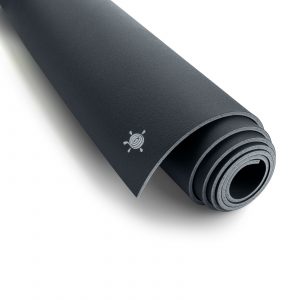
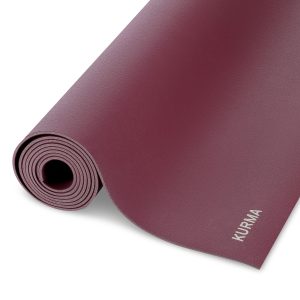
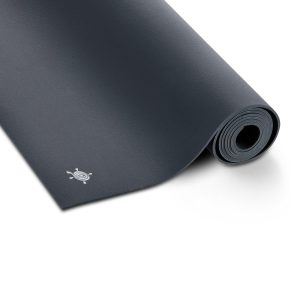
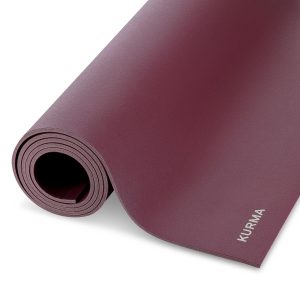
- Non-slip yoga mat
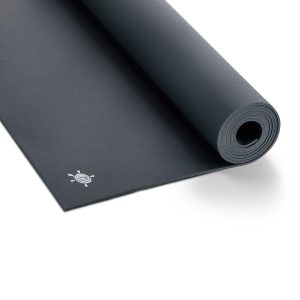
GECO Garnet 200 x 66
- Non-slip yoga mat
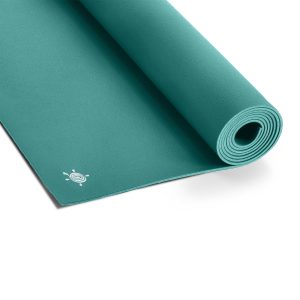
GECO Lagoon 200 x 66
Why a natural rubber yogamat delivers serious grip (even with sweaty hands)
Natural rubber creates a tacky, friction-rich surface. It holds strong when you’re dry. It holds strong when you’re dripping. During Vinyasa (a flowing yoga style linking breath and movement), Ashtanga, or Power Yoga, transitions happen fast and heat builds up. That sticky contact keeps your hands and feet locked in place. Synthetic materials can get slippery. Moisture shows up and grip disappears. Yoga mats natural rubber thrive in those conditions. Choose a rubber yoga mat when grip matters more than ultra-light or ultra-thin specs.
GECO or GECO Lite: which rubber yoga mat fits your practice?
Both deliver outstanding grip and European-made quality, but they serve different needs. Here’s how to decide between KURMA’s two natural rubber yogamat lines:
- Cushioning and feel: Choose GECO (6 mm) if you want extra cushioning and a grounded, steady sensation under your palms and knees. Choose GECO Lite (4 mm) if you prefer closer floor contact and less bulk in your roll.
- Weight and portability: Choose GECO Lite (1.9 kg) if you carry your mat to the studio regularly. Choose GECO (2.5 kg) if your mat mostly stays put at home or in one location.
Which size natural rubber yogamat do you need: 185 cm or 200 cm?
Both GECO and GECO Lite come in 185 cm and 200 cm lengths. Your choice depends on your height and how much movement space you claim in flows. Here’s the breakdown:
- Your height plus movement room: Are you tall? Then choose 200 cm. Do you love extra real estate for jumps, extensions, and full-body stretches? Then choose 200 cm. Do you practice in compact studio corners or tight home spaces? Choose 185 cm.
- Where you practice: Do you travel with your mat? Choose 185 cm. Do you value easier transport and storage? Choose 185 cm. Does your mat stay in one place? Does maximum coverage beat convenience? Choose 200 cm.
4 mm vs 6 mm rubber yogamat: cushion for knees and wrists vs stability
Thickness changes how your body receives feedback from the floor. No theory, just when each works best for your rubber yoga mat practice:
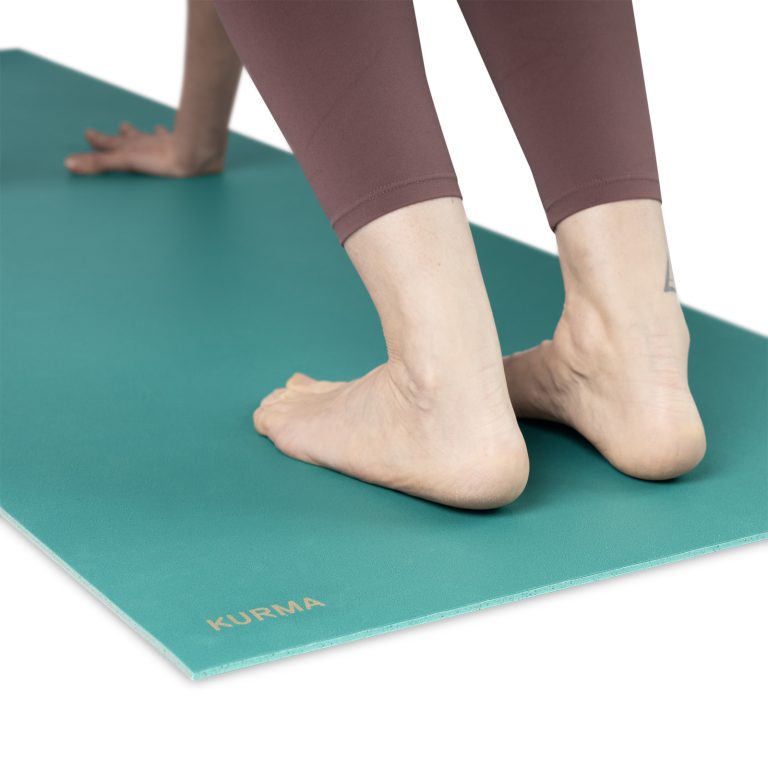
- Sensitive knees or wrists: Choose 6 mm. The extra foam absorbs impact during kneeling poses, planks, and arm balances, so your joints stay happier session after session.
- Balance and floor connection: Choose 4 mm. Less material between you and the ground means sharper body awareness (proprioception), helping you refine alignment and nail those standing balances.
Which yoga style pairs best with yoga mats natural rubber?
Different practices demand different mat traits. Yoga mats natural rubber excel in scenarios where slip equals frustration. Recognize yourself in one of these?
- Dynamic and sweaty (Vinyasa, Ashtanga, Power): Rubber delivers reliable grip through every transition from low plank to upward dog (chaturanga-to-updog), even when your palms are soaked. No towel required.
- Slower and grounding (Hatha, Yin): Rubber gives you a stable, tacky surface so you can settle into long holds without micro-adjustments. Less distraction, more depth.
How to keep your rubber yoga mat grippy and beautiful for years
Regular care protects your investment and maintains that signature tackiness. Simple routines prevent buildup and extend mat life. Here’s what works:
- How often you practice: After sweaty sessions, wipe your natural rubber yogamat with water or a gentle mat cleaner. No harsh chemicals—they break down natural rubber faster.
- Storage and transport: Roll your mat and let it air out after intense use. Keep it away from direct sunlight and heat sources to preserve grip and prevent degradation. Store rolled, not folded, during breaks in your practice.
Rubber vs other yogamat materials: when is natural rubber the smarter pick?
Every material has a purpose. Natural rubber shines in specific situations and falls short in others. Quick clarity so you choose right:
- Grip priority: Is slipping your biggest practice-killer? Choose a rubber yoga mat. Moisture appears and rubber locks you in place during demanding flows. It outperforms PVC and TPE.
- Weight and compactness: Do you travel constantly? Does every gram matter? Choose a lighter, more compact alternative. Accept that you’ll sacrifice some sticky grip for portability and fold-ability.
Rubber yoga mat: frequently asked questions
Choose a natural rubber yogamat like KURMA GECO or GECO Lite when you want maximum grip with sweaty hands and feet. Rubber is known for strong wet and dry traction, so you stay locked in place during heated sessions. Both surfaces deliver immediate grip without a break-in period, and the material thrives in moist conditions where synthetic mats turn slippery.
The core choice is thickness and portability. GECO (6 mm) offers more cushioning and a steady, grounded feel that’s ideal if your knees and wrists need extra support. GECO Lite (4 mm) is lighter and slimmer, making it easier to roll, carry, and store. Both deliver identical grip and European-made quality, so your decision comes down to comfort versus convenience.
Choose 200 cm if you’re tall or want generous space for jumps, extensions, and flowing sequences. Do you practice in compact areas? Choose 185 cm. Do you travel with your mat regularly? Choose 185 cm. Do you prefer a tighter footprint at home? Choose 185 cm. Both sizes come in 66 cm width, so only length changes between the two options.
Yes. Beginners benefit hugely from the extra grip and stability rubber provides, because you spend less energy worrying about slip and more focus on alignment and breath. The tacky surface helps you hold poses longer and transition more confidently. Whether you choose 4 mm or 6 mm depends on how much cushioning your joints prefer as you build strength.
Absolutely. Your decision hinges on weight and transport frequency. If you shuttle between home and studio, lean toward GECO Lite for easier carrying. If your mat stays mostly at home with occasional studio visits, GECO’s extra comfort might matter more than the slight weight difference. Both mats handle the same grip demands and yoga styles.
Choose 6 mm if your knees or wrists feel sensitive during kneeling poses, planks, or arm balances. The extra cushioning absorbs impact and keeps joints comfortable. Choose 4 mm if you want sharper floor feedback for balance work and easier transport. Thinner mats also roll tighter and weigh less, so they travel better if you move your mat often.






© 2026 - Vana Group BV